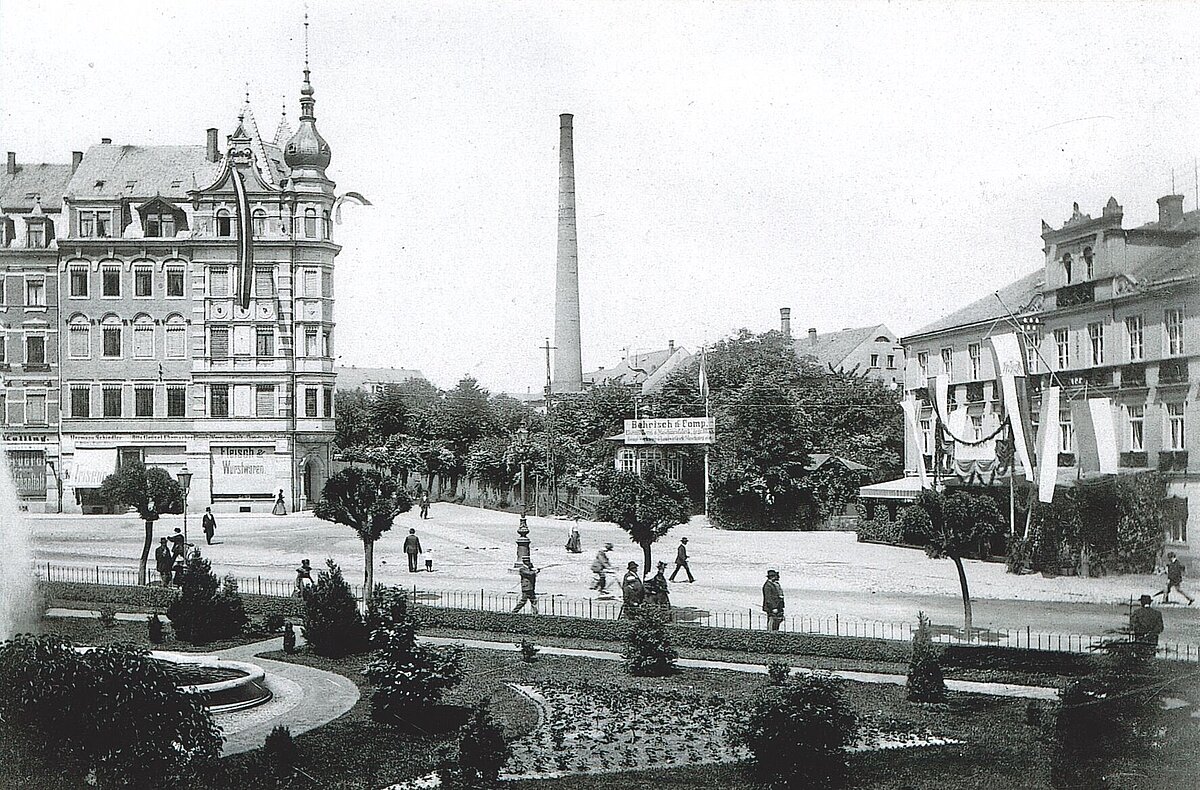
Behrisch & Co. Iron Foundry
Sachsenstraße 2-4
Emil, around 1903
» Trouble has been brewing at Behrisch & Co. for quite some time now. No new staff are hired at all despite business going fairly well. My oldest son works his fingers to the bone at the foundry, sieving sand for the moulds all by himself. His foreman is already threatening to call a strike if things aren’t going to change for the better soon. «

Emil, around 1903
» Trouble has been brewing at Behrisch & Co. for quite some time now. No new staff are hired at all despite business going fairly well. My oldest son works his fingers to the bone at the foundry, sieving sand for the moulds all by himself. His foreman is already threatening to call a strike if things aren’t going to change for the better soon. «
Saxony was a powerhouse of the German labour movement at the beginning of the 20th century. In August 1903, thousands of textile workers went on strike in the town of Crimmitschau for several months. They were demanding shorter working hours, longer breaks, and higher wages. In Löbau, the uprising began to materialise a month earlier. A dozen workers put down their tools at Behrisch & Co. in July 1903. However, their demands seemed almost modest compared to those in Crimmitschau:
They were asking for more workers! But the factory management refused, as more staff would ultimately mean higher costs. The workers and the management settled after 5 days. The striking workers will not be laid off; they may continue working under the same conditions. The Behrisch & Co. iron foundry was destroyed in a bombing raid in 1945. The plot was used as a bus terminal in the GDR, and a large shopping mall was built there in 1998.