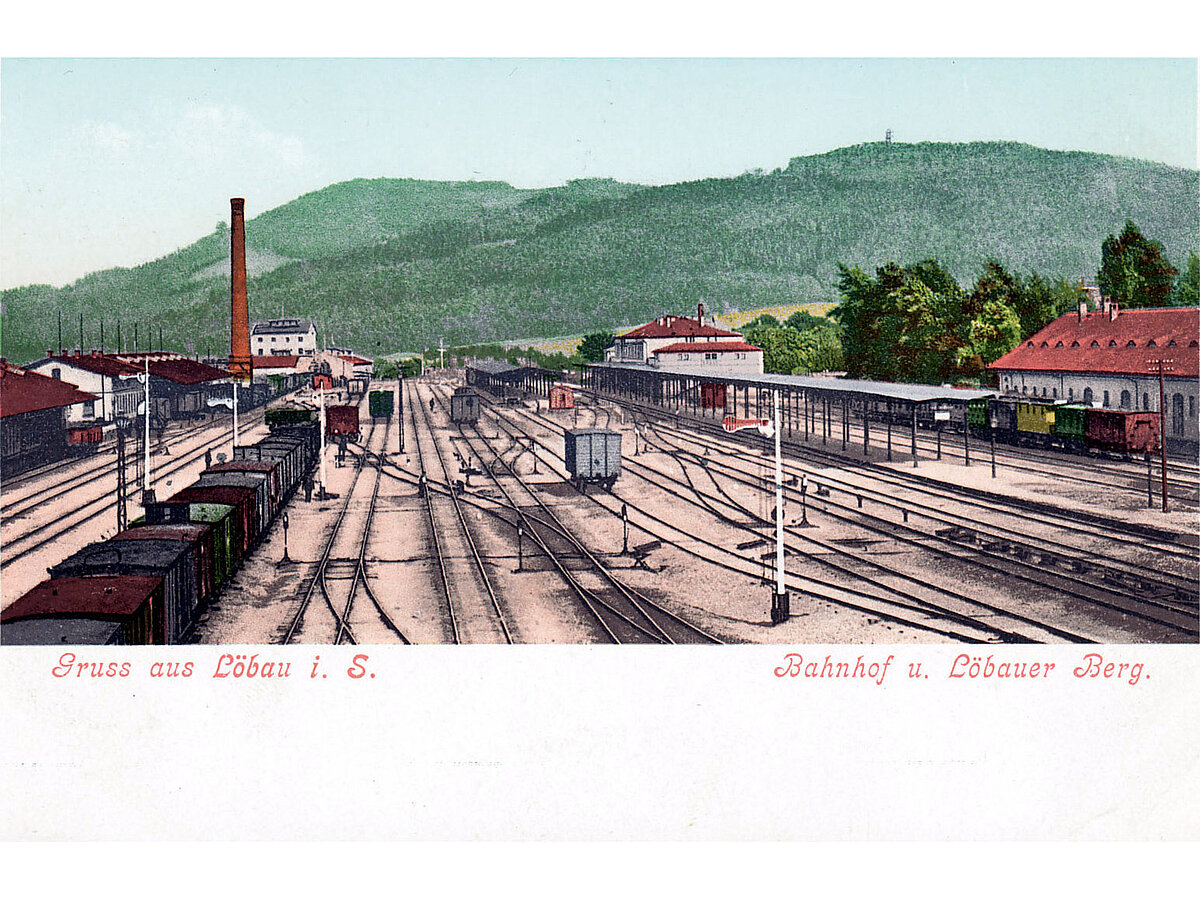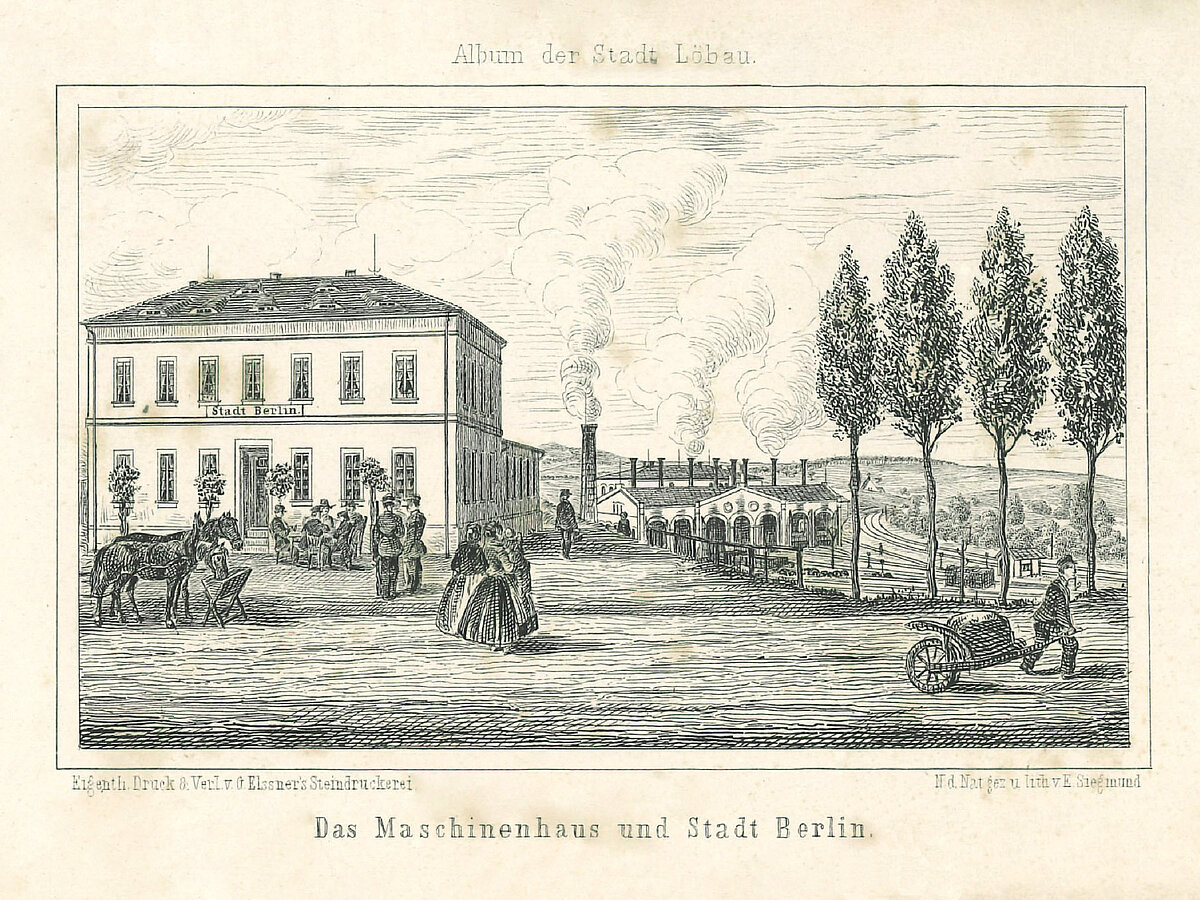
Railway station and Engine House
Bridge Weißenberger Straße
Hedwig, around 1858
» How fast things have changed! I still remember hearing the crack of the postmen’s whips. Now, all I can hear is the whistling and eerie blowing of the steam engines. My dear grandson helped with the earthworks on the railway line. My neighbour recently told me how fast one can now travel to Dresden. Alas, I couldn't afford the journey back then, and I surely can’t now. «
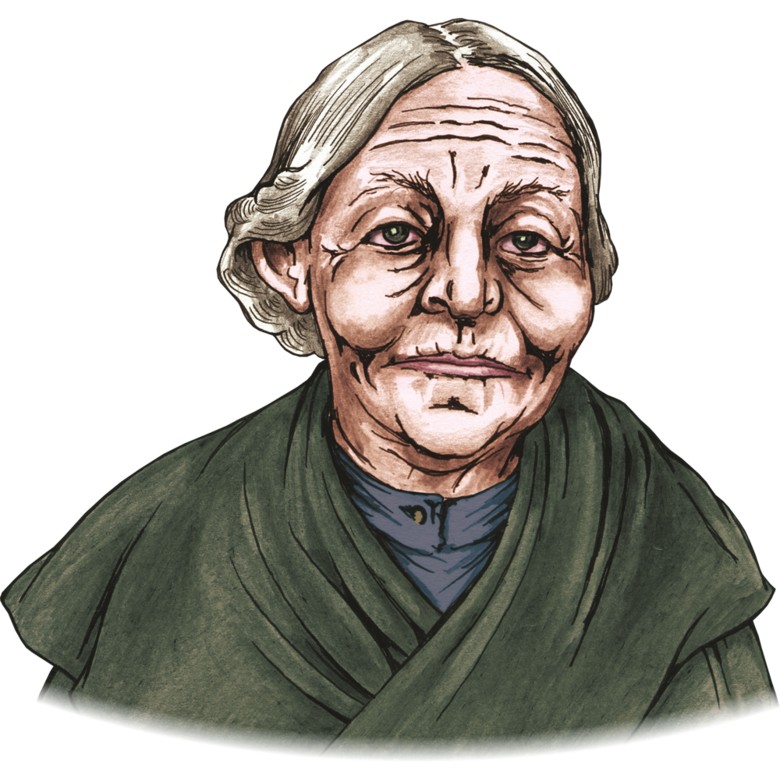
Hedwig, around 1858
» How fast things have changed! I still remember hearing the crack of the postmen’s whips. Now, all I can hear is the whistling and eerie blowing of the steam engines. My dear grandson helped with the earthworks on the railway line. My neighbour recently told me how fast one can now travel to Dresden. Alas, I couldn't afford the journey back then, and I surely can’t now. «
The first train from Bautzen was scheduled to arrive in Löbau on 16 December 1846, but it got stuck in a snowdrift just outside Bautzen. Löbau already lay on the newly planned Dresden–Breslau (today: Wrocław) railway line, and it was rapidly becoming an important transport hub. The town is internationally well connected with rail connections to Reichenberg (today: Liberec) and Prague. A new engine house for 10 locomotives was built to the west of the reception building in 1859.
It is now the oldest surviving engine house in Saxony. The sugar refinery next door had its own tracks installed and a connection to the wider railway network. Deutsche Bahn no longer operates this route. The station is now run by a private railway company on the Dresden–Görlitz line. The East Saxon Railway Enthusiasts Association Ostsächsische Eisenbahnfreunde e.V. maintains the engine house now and welcomes thousands of visitors every year.