Villa Sanssouci
Hartmannstraße 5
Anna, around 1910
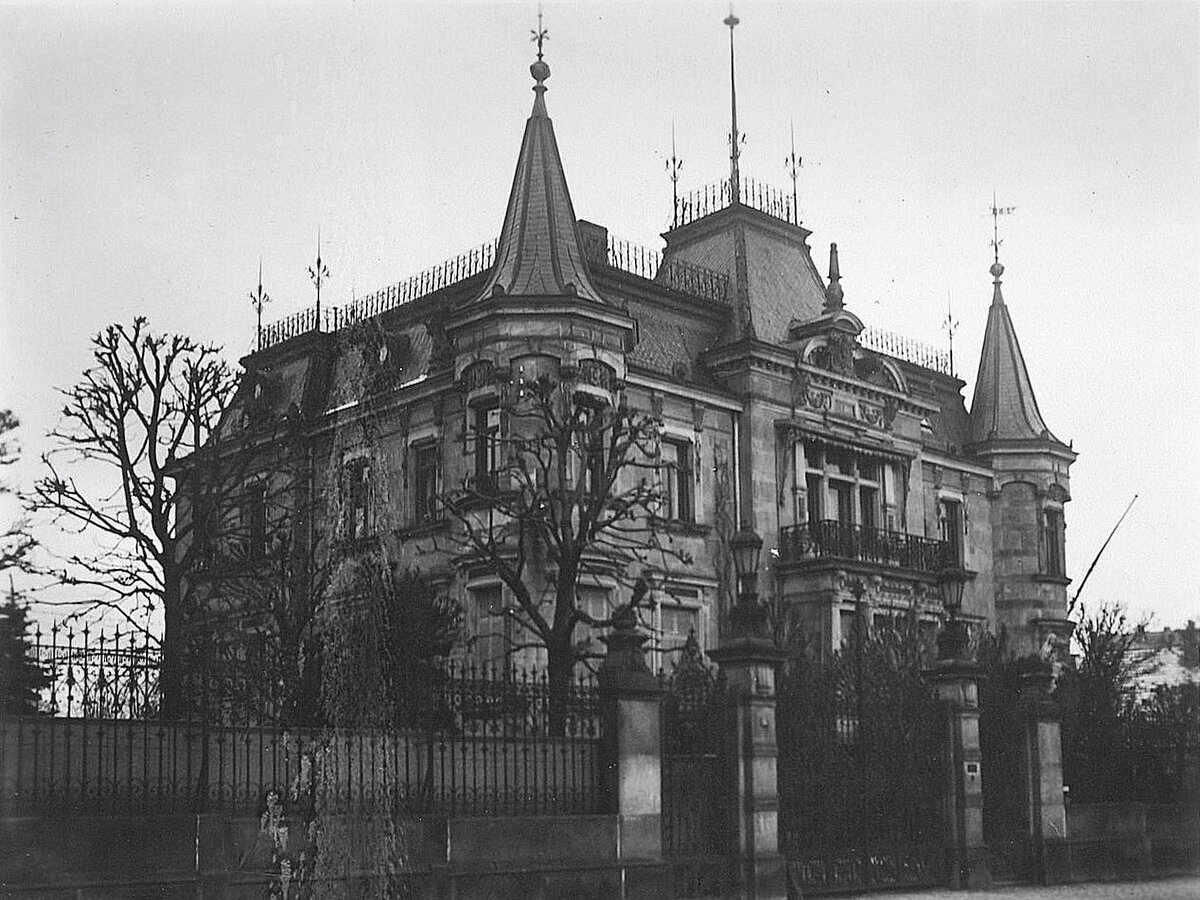
» What a house! How I would love to sit on the roof terrace and look over the city or enjoy a walk under the shade of the trees in the park. It was sold not long ago but, alas, not to my dear Papa. Mr Müller, who bought it, also owns a factory. He paid 75,000 marks. That’s a lot of money! But Papa said it had cost a lot more to build it. «

Anna, around 1910
» What a house! How I would love to sit on the roof terrace and look over the city or enjoy a walk under the shade of the trees in the park. It was sold not long ago but, alas, not to my dear Papa. Mr Müller, who bought it, also owns a factory. He paid 75,000 marks. That’s a lot of money! But Papa said it had cost a lot more to build it. «
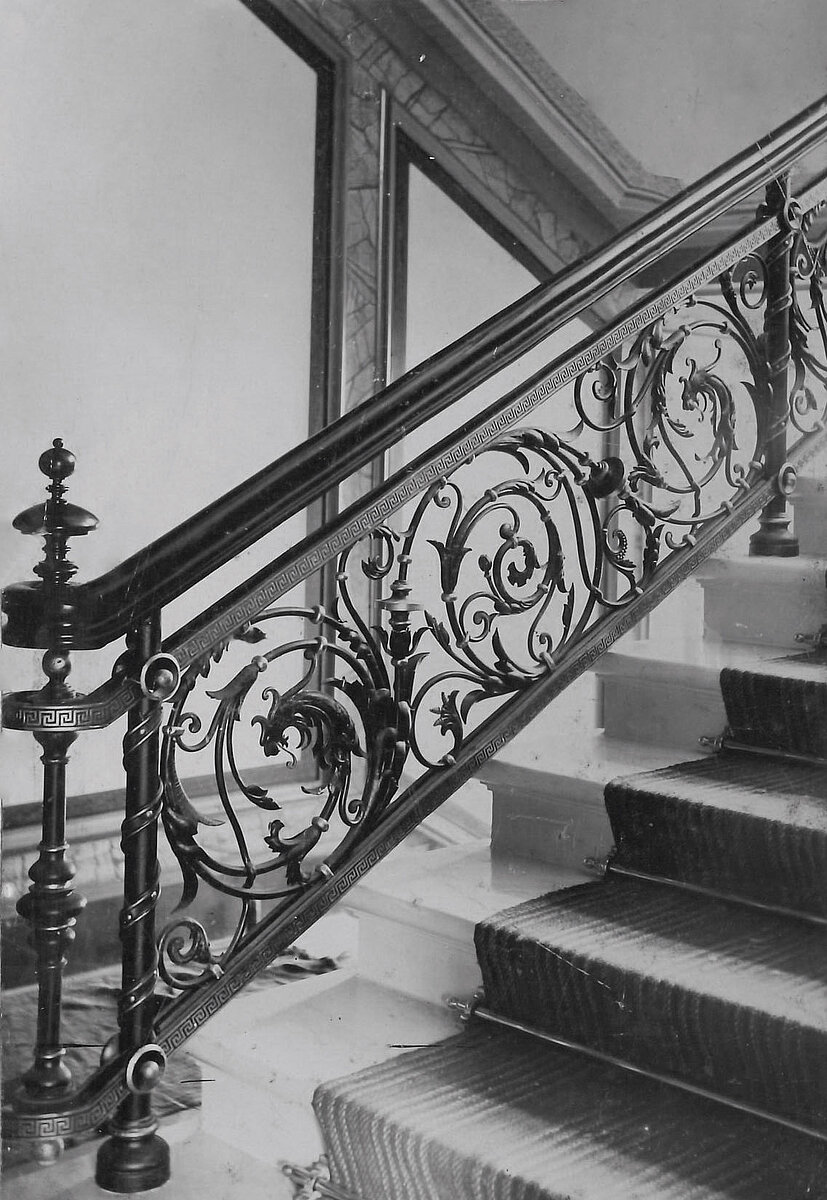
Villa Sanssouci (French for “without worry”) symbolises the unburdened lives wealthy factory owners strived for in the 19th century. The Villa was commissioned by Löbau textile industrialist Eduard Rönsch. Architect Bruno Berthold also included oriental elements in his design that would remind Mr Rönsch of buildings he had seen during his numerous journeys. It cost over 250,000 marks to build the house. A detail on the wrought-iron gate forged by master locksmith Adolf Hilliger displays the owner’s initials.
And the design of the fence was based on that seen at the Palace of Versailles. The backyard housed the servants’ quarters: only the particular wealthy could afford to have a separate house for their staff. Then, in 1908, textile manufacturer Julius Müller bought the house after Rönsch had passed away. The building was used by the East German Stasi state security service from 1955 to 1950. Today, the house is privately owned again and declared a listed building.